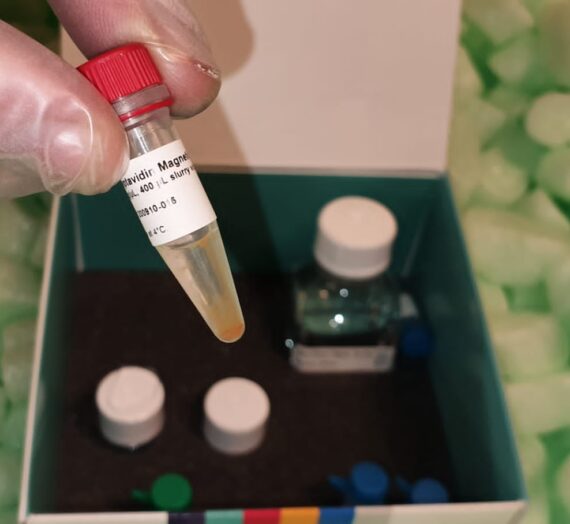
Herpes Simplex Virus 1 (HSV-1) is a common viral pathogen that primarily causes oral herpes but can also lead to more serious infections such as encephalitis and keratitis. Accurate diagnosis and monitoring of HSV-1 infections rely on molecular diagnostic techniques like PCR (Polymerase Chain Reaction), which is highly sensitive and specific for detecting viral DNA. The HSV-1 DNA PCR Qualitative Positive Control is an essential component in the PCR process, ensuring the accuracy and reliability of results.
Role of HSV-1 PCR in Diagnosis
PCR is a molecular technique used to amplify and detect specific DNA sequences. In the case of HSV-1, PCR can detect viral DNA in a variety of sample types, including cerebrospinal fluid (CSF), blood, tissue, and swabs from active lesions. The technique is especially useful in diagnosing HSV-1 in patients with neurological symptoms, such as suspected HSV encephalitis, where rapid and accurate diagnosis is critical. For further reading on PCR’s role in viral diagnostics, consult CDC’s PCR Guidelines and NIH research on HSV.

Importance of Positive Control in PCR
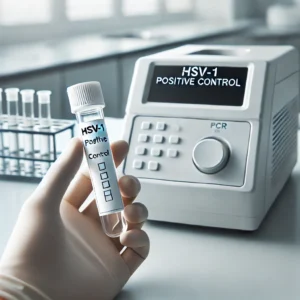
A positive control is used to verify that the PCR assay is functioning correctly and that the reagents are working properly. It ensures that the assay can detect the target HSV-1 DNA when present, thus reducing the risk of false-negative results. Including a positive control in every PCR run provides a benchmark for comparison and confirms that the PCR machine and the amplification process are functioning optimally.
Key advantages of using a qualitative positive control in HSV-1 PCR include:
- Assay Validation: Confirms that the assay is capable of amplifying the target HSV-1 DNA sequence.
- Prevention of False Negatives: Ensures that no errors occurred during the PCR process that could lead to an undetected infection.
- Quality Assurance: Provides quality control measures, helping labs maintain accreditation standards for diagnostic testing.
For quality control best practices in PCR, refer to the World Health Organization (WHO) Laboratory Guidelines and FDA resources on molecular diagnostics.
Applications of HSV-1 PCR Positive Control
- Clinical Diagnostics: In a clinical setting, the HSV-1 DNA PCR positive control is used in assays that test patient samples for HSV-1 DNA. These include samples from cold sores, genital lesions, or cerebrospinal fluid in cases of suspected herpes encephalitis.
- Research and Development: In research laboratories, HSV-1 positive controls are used to validate the development of new PCR-based diagnostic kits or evaluate the efficacy of antiviral therapies.
- Routine Lab Testing: Regular use of positive controls is critical for maintaining the integrity of diagnostic labs, as it helps ensure consistent assay performance over time. Laboratories that conduct frequent HSV-1 testing follow stringent quality control protocols, outlined by organizations like the Clinical and Laboratory Standards Institute (CLSI).
PCR Workflow Involving Positive Controls
- Sample Collection and Preparation: Samples are collected from the patient and prepared for PCR. The positive control, containing a known quantity of HSV-1 DNA, is added to one of the wells in the PCR plate.
- Amplification: During the PCR process, the positive control undergoes the same amplification as the patient samples. The target HSV-1 DNA in the positive control is replicated, demonstrating that the assay can detect viral DNA.
- Results Interpretation: A successful amplification of the positive control confirms that the assay is functioning properly. The patient samples can then be interpreted with confidence. If the positive control fails to amplify, the PCR run is invalid, and the test must be repeated.
Detailed PCR protocols and the role of controls can be explored through FDA’s Diagnostic Testing Guidelines.
Challenges and Considerations in Using Positive Controls
Although positive controls are essential in ensuring the accuracy of PCR assays, they can also pose certain challenges. For instance, cross-contamination is a potential risk if not handled properly. Labs must follow stringent protocols to prevent the positive control from contaminating other samples, which could result in false-positive results. To mitigate these risks, labs adhere to strict quality control measures such as using separate rooms for preparation and PCR, as outlined by the National Institutes of Health (NIH).
Future Directions in HSV-1 PCR Testing
With advancements in molecular diagnostics, the use of positive controls will continue to evolve. New generations of multiplex PCR assays that detect multiple pathogens simultaneously are being developed, requiring more sophisticated control materials. Additionally, digital PCR (dPCR) and next-generation sequencing (NGS) technologies are making strides in HSV-1 detection, offering higher sensitivity and quantitative capabilities. Research into these innovations is ongoing at institutions like Stanford University School of Medicine and Harvard Medical School.